
MeRT — Personalized Brain Treatment Based on Your Unique Neural Signature
MeRT (Magnetic e-Resonance Therapy) is one of the most advanced, individualized approaches to mental health treatment available today. At TMS of Westchester, we offer MeRT for patients of all ages — including children as young as 3 — in Mt Kisco, NY. By combining three powerful technologies into a single, customized protocol, MeRT treats the brain the way yours actually works. Call (914) 241-0758 to learn if MeRT is right for you.
What Is MeRT?
MeRT, or Magnetic e-Resonance Therapy, is a highly individualized form of neuromodulation that combines three well-established technologies: rTMS (Repetitive Transcranial Magnetic Stimulation), which is FDA-cleared; qEEG (Quantitative Electroencephalogram); and EKG (Electrocardiogram). Together, these technologies allow our clinical team to analyze each patient’s unique brain wave activity and develop a customized treatment protocol designed specifically for their brain — not a one-size-fits-all approach.
Unlike standard TMS Therapy, which applies the same protocol to all patients, MeRT begins with a detailed picture of how your brain is currently functioning. This allows us to target treatment precisely, maximizing effectiveness while minimizing unnecessary stimulation. The result is a personalized neuromodulation experience that is as unique as you are.
How Does MeRT Work?
Every MeRT protocol begins with a qEEG — a quantitative electroencephalogram that measures the brain’s electrical activity across different regions. Simultaneously, an EKG captures the heart’s rhythm to further refine the treatment protocol. Together, these measurements give our team a detailed map of how your brain is functioning, using Alpha wave activity as the primary marker.
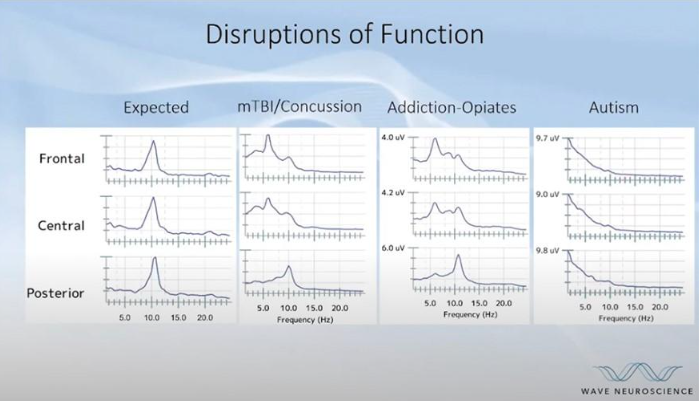
Research has established that synchronized and maximized Alpha wave activity allows the brain to operate in a healthier, more optimal state. When Alpha waves are disorganized, disrupted, or absent in key regions of the brain, symptoms such as depression, anxiety, cognitive fog, sleep difficulties, and behavioral challenges often follow.
The information gathered from your qEEG and EKG is then used to develop a personalized rTMS treatment protocol — one calibrated specifically to your brain’s individual frequency. By delivering targeted magnetic stimulation at the frequency your brain needs, MeRT helps restore healthy neural communication, reduce symptom burden, and improve overall brain function.
Understanding Brain Waves
At TMS of Westchester, our MeRT program focuses on all four of the main brain wave types:
Delta (1–4 Hz): Associated with deep sleep and restorative recovery.
Theta (4–8 Hz): Associated with light sleep and certain creative states.
Alpha (8–13 Hz): Present when we are awake with eyes closed, in a calm and relaxed state. This is the brain wave most central to MeRT treatment.
Beta (13–29 Hz): Present during active, alert wakefulness.
Each individual has a natural Alpha frequency — a specific Hertz value between 8 and 13 that their brain is most comfortable operating at. For example, one person may have a natural Alpha frequency of 8.7 Hz, while another’s may be 12.6 Hz. What matters most is not simply that Alpha waves are present, but that the brain is synchronized to that person’s own inherent Alpha frequency. Using EEG imaging, our team can identify regions where the brain is not synchronizing properly and deliver targeted stimulation to help restore optimal function.
Who Can Benefit from MeRT?
MeRT is an excellent option for patients who have not achieved adequate results with conventional medications or standard therapies, as well as those who wish to simplify their medication regimes or simply want to feel better. Conditions that MeRT has been shown to address include:
PTSD: MeRT helps regulate the overactive neural circuits associated with post-traumatic stress, reducing hypervigilance, intrusive thoughts, and emotional reactivity.
Depression: For patients with treatment-resistant depression, MeRT offers a personalized path to relief that goes beyond what standard TMS or medication management alone can achieve.
Autism Spectrum Disorder (ASD): Research has shown that many children and adults with autism have little or disorganized Alpha wave activity. MeRT has been shown to optimize Alpha synchronization in individuals with ASD, often resulting in meaningful improvements in eye contact, connection to others, focus and concentration, speech and language, ability to follow directions, and tolerance of complex environments.
Traumatic Brain Injury (TBI): TBI can disrupt normal brain wave patterns and communication across neural networks. MeRT’s targeted approach helps address these disruptions and support cognitive and functional recovery.
Anxiety, Sleep Disorders, Cognitive Impairment, and More: The brain-based nature of MeRT means it can be applied to a wide range of conditions driven by disrupted neural activity. Visit our Additional Expertise page for more on the conditions we treat.
To find out whether MeRT may be right for you or your child, contact TMS of Westchester at (914) 241-0758 or visit our New Patients page to schedule an evaluation in Mt Kisco, NY.
MeRT Is Now FDA Cleared for PTSD
There’s new hope for people living with post-traumatic stress disorder. MeRT is now FDA cleared as a personalized, non-invasive treatment option for PTSD, offering a more individualized approach to care.
For many people, PTSD can affect sleep, mood, focus, and daily life in ways that feel overwhelming. MeRT is designed to support healing by using information from your brain’s own activity to guide treatment in a way that feels personal, thoughtful, and precise.
Why This Matters
PTSD affects millions of people, including veterans, first responders, trauma survivors, and many others. While traditional treatments can be helpful, some people continue to struggle with symptoms even after trying therapy or medication. That’s why having more options matters.
MeRT offers a different path forward by tailoring treatment to each person’s unique brain activity. Instead of taking a one-size-fits-all approach, it begins with understanding how your brain is functioning and uses that information to shape a more personalized treatment experience.
What Makes MeRT Different
MeRT stands for Magnetic EEG-Guided Resonance Therapy. It combines brainwave mapping with gentle magnetic stimulation to create a treatment plan based on your individual needs.
This personalized approach can help care feel more intentional and supportive. Rather than using the same protocol for everyone, MeRT is designed around your unique brain patterns.
As an FDA-cleared adjunctive treatment for PTSD, MeRT is used alongside a broader care plan. It is designed to help calm emotional reactivity, support better sleep, and encourage healthier brain synchrony over time.
What to Expect
Treatment typically takes place over 4 to 8 weeks, with weekday sessions lasting about 30 minutes. The process is gentle, non-invasive, and designed to fit into everyday life as smoothly as possible.
• Step 1: Brain Mapping
A simple, painless qEEG measures your brain’s electrical activity and helps identify patterns that may be contributing to symptoms.
• Step 2: Personalized Planning
Your care team uses that information to create a treatment plan tailored to your brain’s unique activity.
• Step 3: Gentle Stimulation
During treatment, targeted magnetic pulses are delivered to specific areas of the brain to support healthier patterns of activity.
• Step 4: Ongoing Adjustment
Your progress is monitored along the way, and your treatment plan can be adjusted as needed to support the best possible outcome.
Take the Next Step
If you or someone you love is living with PTSD, you don’t have to navigate it alone. MeRT offers a personalized, non-invasive approach that may help support healing, balance, and a greater sense of calm.
We’re here to answer your questions, help you understand your options, and guide you through what treatment could look like for you. Reach out to learn more or schedule a consultation.
Frequently Asked Questions — MeRT
What benefits may result from MeRT?
The main goal of MeRT brain treatment is to achieve functional recovery, and outcomes vary based on individual symptoms. Potential benefits include improved sleep, mood, focus, communication, behavior, attention span, sociability, motivation, concentration, emotional stability, and reduced anxiety. Some patients also report increased energy, better adaptability, and reduced cravings.
How is MeRT different from standard TMS or rTMS?
Unlike standard repetitive Transcranial Magnetic Stimulation (rTMS), which applies a fixed stimulation protocol to all patients, MeRT personalizes treatment using qEEG and EKG data. This allows therapy to target each individual’s brainwave patterns at their natural frequency, leading to more precise and potentially more effective outcomes.
What is a typical course of MeRT therapy?
A typical session lasts about 30–40 minutes and is performed 5 days a week for approximately 6–8 weeks. Some patients begin to notice improvements within the first 5–10 sessions, although response times vary.
How long will the effects of MeRT last?
Results vary by individual. In general, longer treatment durations are associated with longer-lasting results. Some patients may return for additional sessions if symptoms gradually return over time.
Are there any side effects of MeRT?
Side effects are typically mild and temporary. The most common is a mild headache at the stimulation site. Other possible effects include temporary changes in energy, mood, or activity levels. The risk of seizures exists but is extremely low.
Will my MeRT treatment protocol be personalized?
Yes. Each patient’s protocol is based on their individual qEEG and EKG data. Protocols may be adjusted throughout treatment based on brainwave changes and clinical response.
Is MeRT safe, and can children receive treatment?
MeRT is a non-invasive, drug-free therapy that is generally well tolerated. It is used for both adults and children, including those with conditions such as autism spectrum disorder, under professional supervision.
Will missing a session affect my results?
Consistency is important, especially during the early phase of treatment. Missing an occasional session later in the protocol typically does not significantly impact overall results.